
Bibliography Background About KRIS
Hypothesis #2: Coho salmon and Steelhead trout production is limited by high water temperature in some reaches of the Navarro River.
Two recent studies, The Navarro Watershed Restoration Plan (Entrix et al., 1998) and the Navarro River total maximum daily loads for temperature and sediment (U.S. Environmental Protection Agency, 2000), found that high water temperatures were limiting salmonid production in the Navarro River watershed. Welsh et al. (2001) found that coho are not likely to persist where maximum floating weekly average temperature (MWAT) exceeds 16.8° Celsius. Based on a review of steelhead growth studies, Sullivan et al. (2000) found that compared to optimum temperatures, an MWAT of 17.0° C reduced steelhead growth by 10%, and an MWAT of 19.0° C reduced growth by 20%. McCullough (1999) found that all salmonids ceased growth at temperatures over 20° C and that the optimum temperature range for juvenile salmonid rearing was 10-15.6° C. The lethal temperature for Pacific salmon recognized by Sullivan et al. (2000) was 26° C, but streams may attain this temperature for brief durations and still retain steelhead. See the Temperature Background page for more information on salmonid temperature requirements.
Both the Entrix et al. (1998) and the Navarro River TMDL (U.S. EPA, 2000) studies were based on continuous water monitoring data collected from probes placed in streams throughout the watershed by the Mendocino County Water Agency and Mendocino Redwood Company. Researchers found that maximum water temperatures were unsuitable for salmonids in many tributaries and that fewer than 25% of all locations met coho salmon rearing requirements (Figure 1).
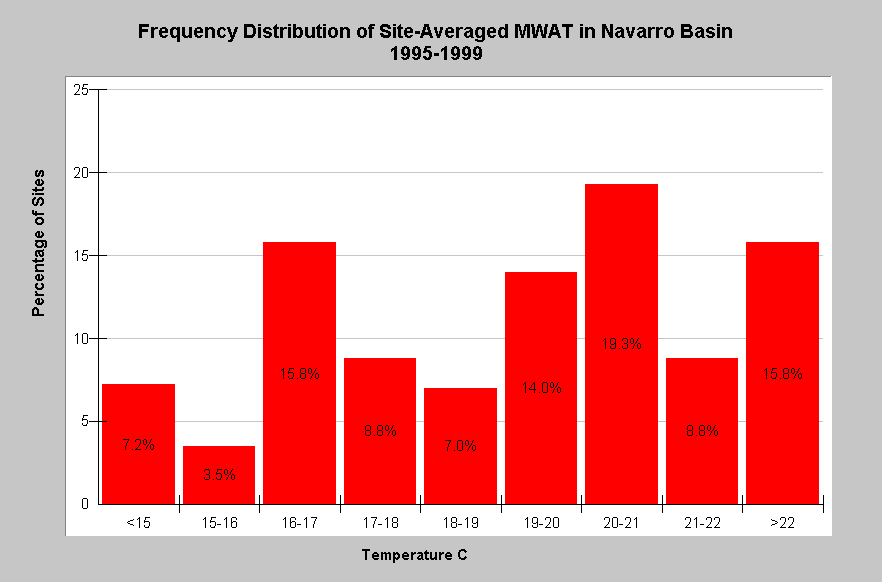 Figure 1. The chart shows the percentage of sites in the Navarro River Basin that were within defined ranges of maximum floating weekly average temperature (MWAT) from 1995-1999. Sites with an MWAT greater than 16.8° C generally do not support coho salmon (Welsh et al., 2001). The chart indicates that 74% of the sites studied for the Navarro TMDL had MWATs greater than 17° C, which inhibits steelhead growth. Temperatures at 44% of locations had MWATs over 20° C indicating that steelhead would cease growth for long periods of time. The chart is a reproduction of Figure 2-1 in the Navarro River TMDL (U.S. EPA, 2000).
Findings also indicated that in many locations, stream temperatures were high enough to be lethal to salmonids on many days during the summer months (U.S. EPA, 2000). Documentation of temperature impairment of coho salmon and steelhead production is provided in charts below for the lower mainstem Navarro (Figure 2), reaches of the North Fork Navarro (Figure 3), Indian Creek (Figure 4), Anderson Creek (Figure 5), and Rancheria Creek (Figure 6). The latter chart shows that the minimum, average and maximum water temperature fluctuate widely, which makes the site acutely stressful for salmonids (Entrix et al., 1998).
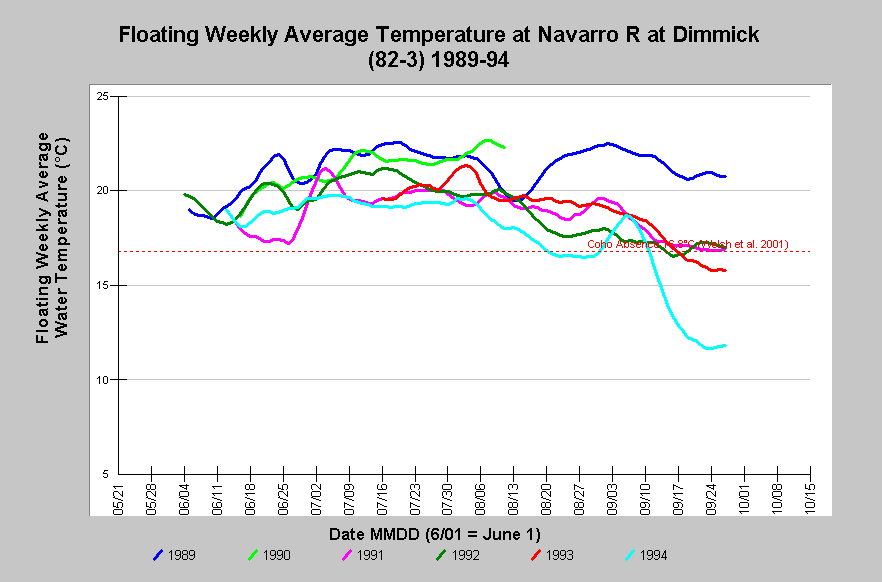 Figure 2. The lower mainstem Navarro floating weekly average temperature at Dimmick State Park for the years 1989-1994 are displayed here. They indicate that temperatures were far above those required by coho salmon juveniles for rearing (16.8 ° C) and also reached levels that impair steelhead growth. Streams that exceed 22° C may have maximum water temperatures over 26° C, which is highly stressful or lethal. Data provided by the Mendocino Redwood Company.
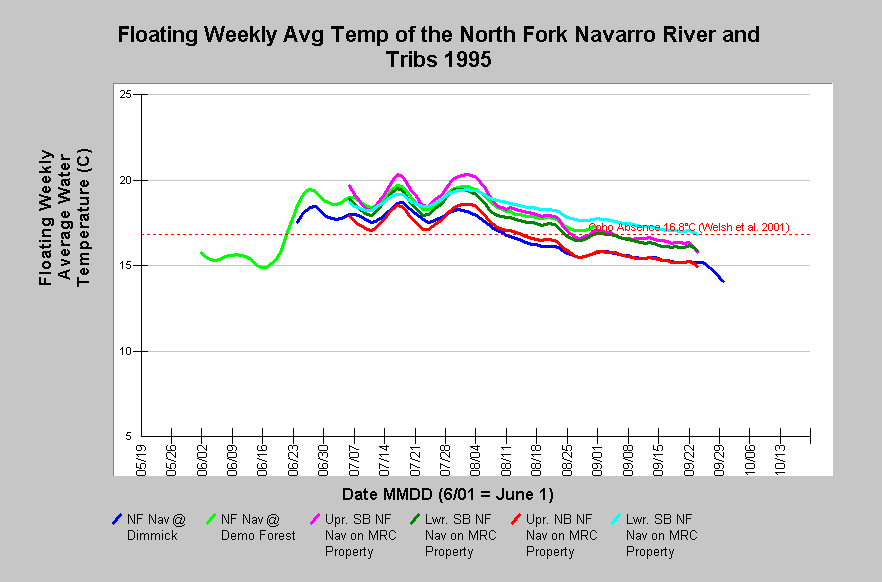 Figure 3. In 1995, the floating weekly average water temperature exceeded 16.8° C for long durations at several location in the North Fork Navarro River and major tributaries, making them unsuitable for coho. There were habitable reaches of the North Fork, however. Locations like the upper South Branch North Fork Navarro had temperatures known to compromise steelhead growth. Data provided by the Mendocino Redwood Company.
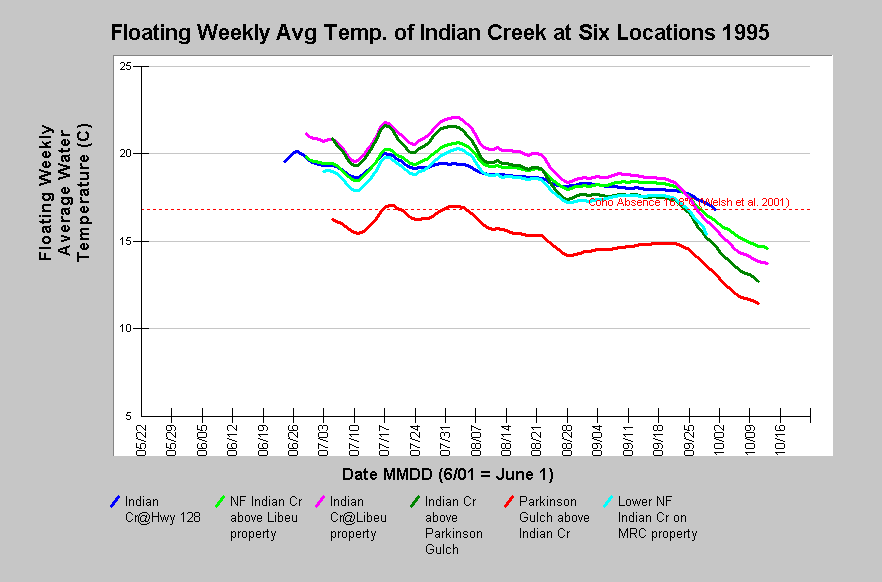 Figure 4. This chart shows the floating weekly average water temperature at six locations in Indian Creek in 1995. Most reaches or tributaries were well over the threshold recognized for coho salmon juvenile suitability, except for Parkinson Gulch. Locations like Indian Creek at the Libeau property had temperatures exceeding the range know to impair steelhead growth. Data provided by the Mendocino County Water Agency.
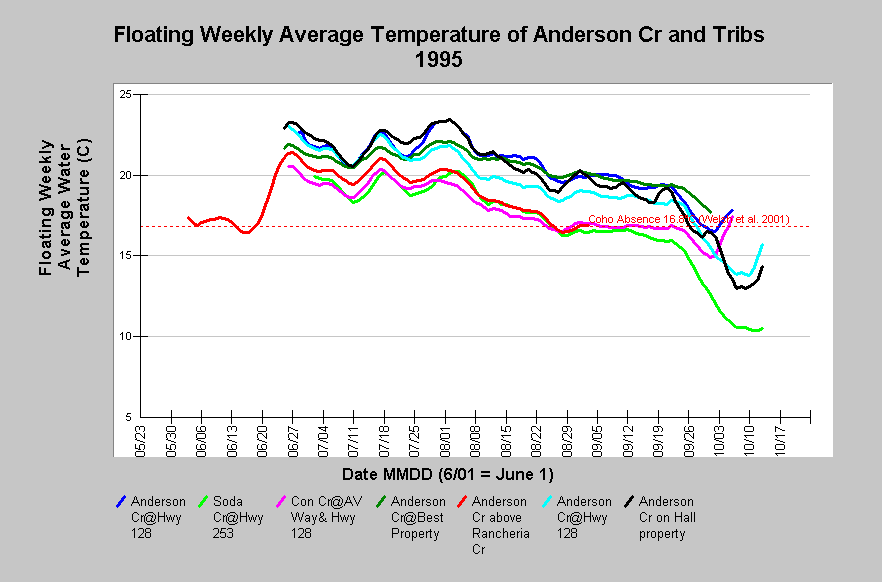 Figure 5. The floating weekly average water temperatures in Anderson Creek and tributaries in 1995 indicate water too warm to support coho and well within the range known to be stressful or lethal to steelhead at most locations. Data provided by the Mendocino County Water Agency.
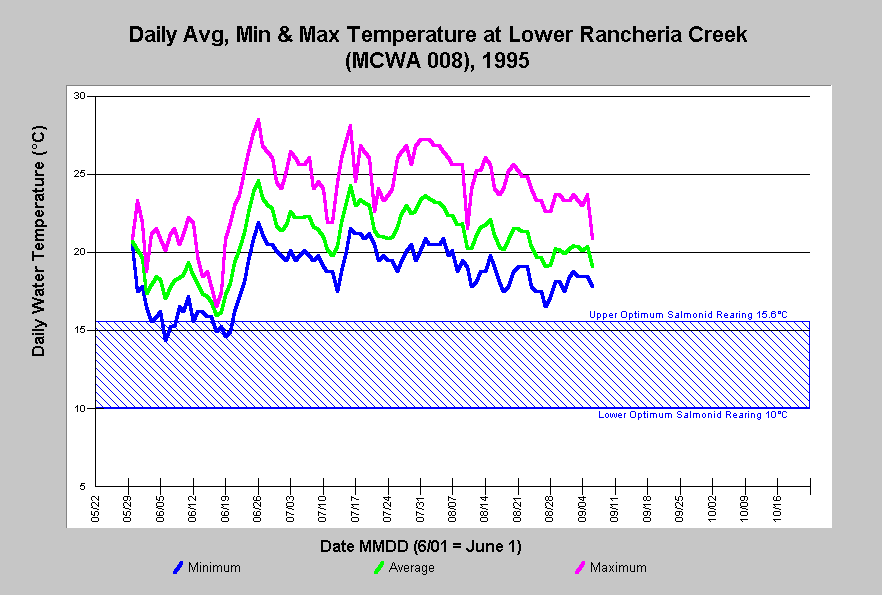 Figure 6. The daily minimum, maximum, and average water temperatures in lower Rancheria Creek were above 15.6° C, the upper optimal temperature for salmonid rearing, for almost the entire 1995 season. Temperatures were well above those known to support coho salmon. Peaks in the maximum stream temperature exceeded 26° C several days from late June to August, which indicates acute stress or even lethal temperatures for steelhead.
The Navarro TMDL (U.S. EPA, 2000) assessed current stream temperatures, then used a model to determine "the potential amount of shade that would be present if the vegetation near streams was fully mature" (Figure 7). Other factors considered were "sun position, topography, stream location and orientation, the un-vegetated channel width, and the distribution of vegetation types in the watershed." They concluded that many streams would fall back within optimal ranges for salmonids if canopy conditions were allowed to mature.
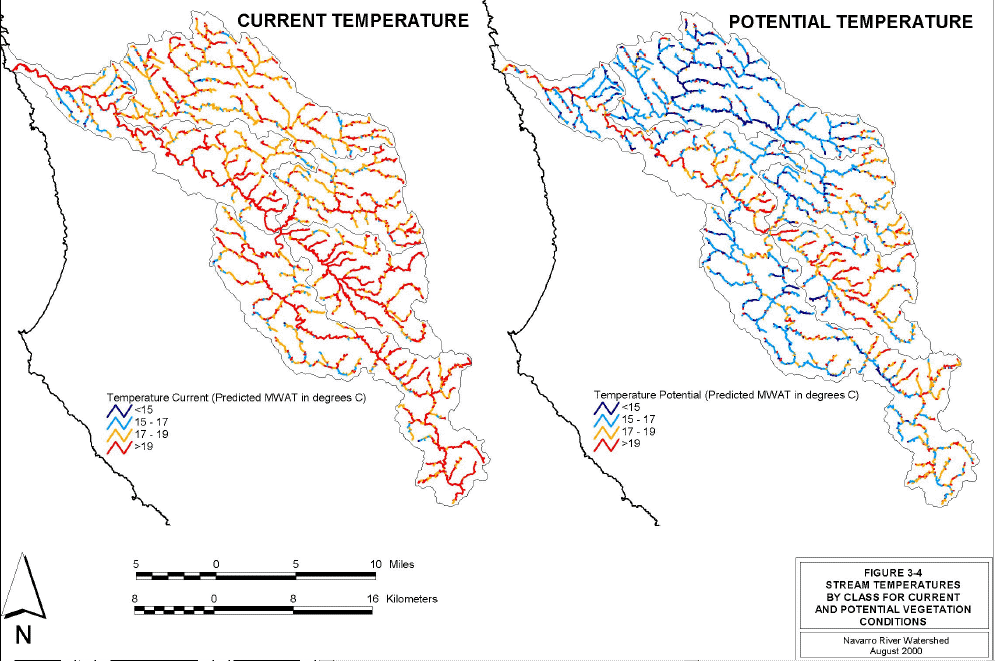 Figure 7. This map shows the current MWAT for Navarro River basin streams and their potential temperature if restored. Coho require an MWAT less than 16.8° C. The blue colors on the map show temperatures less than 17° C. Much of the watershed which does not currently support coho would have suitable temperatures if mature riparian vegetation were present. Figure 3-4 taken from U.S. EPA (2000).
Topics Supporting the Hypotheses
The following is a list of Topics in KRIS Navarro where you can see data in its context, Metadata and associated Info Links. The large-case letters in parentheses indicate KRIS sub-basins.
(BW) Temperature: Stream Temperature Frequency Distribution, TMDL 2000
(MN) Temperature: FWA at Navarro R near Dimmick (Site 82-3) 1989-1994.
(NF) Temperature: FWA, North Fork Navarro and tributaries 1995
(IC) Temperature: FWA, Indian Creek at Six Locations 1995
(AC) Temperature: FWA, Anderson Creek and tributaries, 1995
(RC) Temperature: MMA at Rancheria Creek - lower (Site 008), SWRCB 1995
Alternative Hypothesis
Mainstem reaches and some tributaries of the Navarro River were always warm and coho were never predominant there and steelhead have adapted.
Lewis et al. (2000) pointed out that larger order streams have naturally elevated temperatures as a result of being further from their spring sources and their increased width, which does not allow full shading. Water temperatures in streams that flow from interior basins in northwestern California are more subject to warming than those in the coastal fog zone (Lewis et al., 2000). Consequently, interior basin streams such as Indian, Rancheria and Anderson Creek are naturally warm as a result of mélange terrain with natural grasslands and oak woodlands, which provide sparse riparian vegtation. Steelhead would naturally dominate interior basins and would have adapted to these naturally warm stream ecosystems.
Monitoring Trends to Test the Hypotheses
While the hypothesis offered has been supported by current field data in the Navarro basin, relationships of salmonid abundance and distribution could be further explored if conditions change. For example, if sediment control is implemented and riparian zones allowed to mature, increased canopy and improved micro-climates over streams may promote stream cooling. Sediment reduction will also promote a lower width to depth ratio, which reduces direct heat exchange and helps maintain cool water temperatures. Monitoring fish community structure and salmonid abundance to see how they respond to decreasing water temperatures would provide a means to test these hypotheses.
References
Entrix Inc., Pacific Watershed Associates, Circuit Rider Productions Inc., Navarro Watershed Community Advisory Group, and D.T. Sicular. 1998. Navarro Watershed Restoration Plan. Prepared for Mendocino County Water Agency, California State Coastal Conservancy, and Anderson Valley Land Trust Incorporated. Ukiah. 545 pp. [5Mb]**
Lewis, T., D.W. Lamphere, D.R. McCanne, A.S. Webb, J.P. Krieter and W.D. Conroy. 2000. Executive Summary: Regional Assessment of Stream Temperatures Across Northern California and Their Relationship to Various Landscape-Level and Site-Specific Attributes. Forest Science Project. Humboldt State University Foundation, Arcata, CA. 14 p.
McCullough, D. 1999 . A Review and Synthesis of Effects of Alterations to the Water Temperature Regime on Freshwater Life Stages of Salmonids, with Special Reference to Chinook Salmon. Columbia Intertribal Fisheries Commission, Portland, OR. Prepared for the U.S. Environmental Protection Agency Region 10. Published as EPA 910-R-99-010.
Sullivan, K., D.J. Martin, R.D. Cardwell, J.E. Toll, and S. Duke. 2000. An analysis of the effects of temperature on salmonids of the Pacific Northwest with implications for selecting temperature criteria. Sustainable Ecosystems Institute. Portland, OR. 192 pp. [1.5Mb]
U.S. Environmental Protection Agency (USEPA). 2000. Navarro River total maximum daily loads for temperature and sediment. USEPA, Region IX . San Francisco, CA. 45 pp. [1.4Mb]
Welsh, H.H., G.R. Hodgson, M.F. Roche, B.C. Harvey. (2001). Distribution of Juvenile Coho Salmon (Oncorhynchus kisutch) in Relation to Water Temperature in Tributaries of a Northern California Watershed Determining Management Thresholds for an Impaired Cold-water Adapted Fauna. In review for publication in the North American Journal of Fisheries Management. 21:464-470, 2001.