
Bibliography Background About KRIS
Hypothesis #2. Elevated water temperature is limiting Atlantic salmon production in many reaches and tributaries of the Sheepscot River.
Literature Foundation
Discussions below are based in part on water temperature information found in the Background page Temperature Effects on Atlantic Salmon and readers should consult that page for complete references to Atlantic salmon optimal, stressful and lethal temperatures. McCullough (1999) describes ways that water temperatures may limit Atlantic salmon production: reduced fecundity, decreased egg survival, retarded growth of fry and smolts, reduced rearing densities, increased susceptibility to disease and decreased ability of young salmon and trout to compete with other species for food and to avoid predation. Reference lines on charts below reflect 19° C as the upper optimal limit for juvenile Atlantic salmon feeding and 22.5° C as the temperature above which all feeding ceases (Danie et al, 1984) and 31° C is recognized as lethal for all life history phases (Elliot and Elliot, 1995).
Effects of elevated water temperature on juvenile Atlantic salmon may sometimes be direct mortality , but there can also be important sub-lethal and chronic effects. Warm water temperatures are recognized as lowering decrease resistance to disease in salmon (McCullough, 1999) and Danie et al. (1984) noted that "temperatures of 20-27° C reduce resistance to disease and, therefore, are indirectly lethal" to Atlantic salmon. When water temperatures are high, juvenile Atlantic salmon may need to move to less favorable habitats to find local thermal refugia. Bult et al. (1999) found that juvenile Atlantic salmon selected feeding areas with slower currents when water temperatures were elevated and Metcalfe and Thorpe (1992) postulated that such movement and loss of territorial behavior would reduce growth. The effect of sub-lethal temperatures on Atlantic salmon has not yet been completely defined. Even though daily average and maximum temperatures often exceed 22.5° C in the Sheepscot River, the river cools down at night to below 22.5° C, which may allow juveniles to feed. It is unknown how many hours in a day or season a juvenile Atlantic salmon requires water temperatures under 22.5° C to thrive.
The maximum floating weekly average water temperature (MWAT) and maximum floating weekly maximum (MWMT) are used in analysis because they are summary statistics more representative of potential accumulated stress for Atlantic salmon (McCullough, 1999). MWAT is most easily understood as the average temperature during the warmest week of the year. Floating weekly averages are calculated by averaging the daily average temperatures over seven day periods. The highest floating weekly average temperature at a site for a year is the MWAT. MWMT is similar to MWAT; the difference is that MWMT is an average of daily maximum temperatures, whereas MWAT is an average of daily average temperatures.
Given that temperatures in the northern hemisphere generally warm with decreasing latitude, and that the Sheepscot River is the southernmost population of wild Atlantic salmon in North America, and that climate change is warming Maine (NRC, 2003), it is reasonable to suspect that warm temperatures would play a role in the decline of salmon in the Sheepscot.
Sheepscot River Reports and Data Indicating Temperature Impairment for Atlantic Salmon
The Sheepscot River is widely recognized a having a problem with high water temperatures (Arter, 2004; KSWCD, 2003; and Pugh, 2002). Arter (2004) noted that electrofishing surveys suggest that many juvenile Atlantic salmon are lost at the fry and parr stage, and that elevated water temperatures may be the cause of their mortality. Review of water temperature data from Bryant (1956) suggests that the lower Sheepscot at Alna may have increased when compared to those of recent years (see note).
Automated temperature probes have allowed collection of rich data sets for the Sheepscot River basin so that suitability of water temperatures for Atlantic salmon can be checked in all seasons. The Maine Atlantic Salmon Commission (ASC) assembled a comprehensive temperature database by compiling data collected by the Sheepscot River Watershed Council, the Sheepscot Valley Conservation Association, ASC staff, U.S. Fish and Wildlife Service, and NOAA Fisheries. Charts and maps from the KRIS Sheepscot database below illustrate different temperature regimes in various river reaches and tributaries, including their relative locations. The data from the watershed confirm this association, as numerous locations show highly impaired or hostile conditions for adult and juvenile Atlantic salmon during the warmest periods in summer.
Winter data are less conclusive, but survival during periods of severe cold in conditions such as anchor ice could also affect Atlantic salmon survival. Charts and maps of water temperatures should also be considered in terms of fish health, predation and other interacting factors, which may combine with water temperature to limit salmon production in the Sheepscot River basin. Bryant and Mahoney (1950) and Meister (1982) point out that slower current areas may be inhabited by chain pickerel or other warm-adapted predatory fish, and Atlantic salmon juveniles subject to predation there. Sheepscot River water temperature in many places may be stressful or even lethal, but fish may survive in refugia such as springs, seeps or the mouths of cold tributaries, and some information on these areas is described below.
Basinwide Summaries
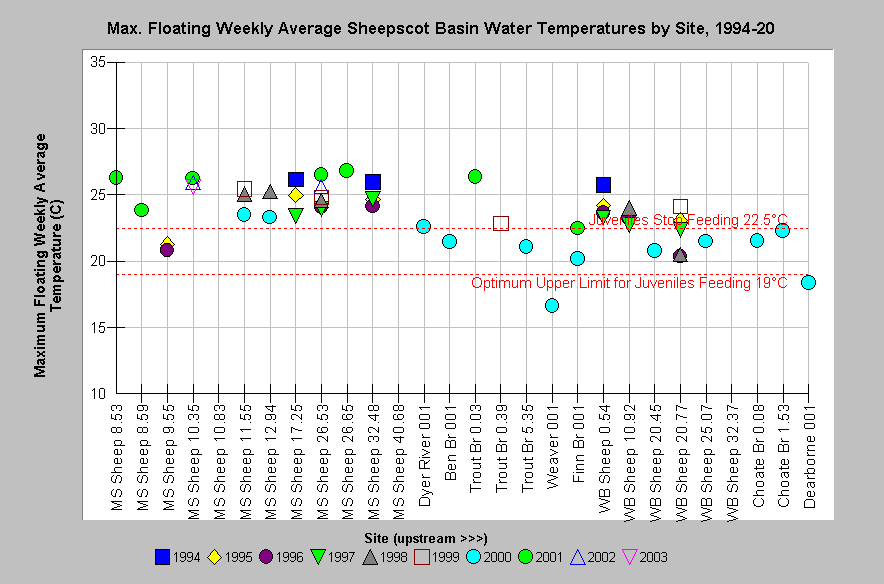 This chart shows the annual maximum of the floating weekly average temperatures (MWAT) of all Sheepscot River reaches or tributaries for the years 1994 to 2003. Of all locations, the floating weekly average water temperature was optimal throughout the year for juvenile Atlantic salmon rearing only in Dearborn and Weaver Brooks. Some Sheepscot tributaries with moderately impaired temperature, having an MWAT above the optimal feeding range of 19° C but below 22.5° C, include Choate, Ben and upper Trout brooks as well as the Dyer River, upper Sheepscot and upper West Branch. Lower Sheepscot River and West Branch reaches have MWATs near or over 25° C represent highly stressful or lethal conditions for juvenile Atlantic salmon. Adults will not migrate upstream in water temperatures higher than 23° C (Danie et al., 1984), so lower Sheepscot temperatures may also be inhibiting early return of spawners before September. Historically the Sheepscot was noted for its "spring" salmon (Foye, 1967), but adults now return predominantly in fall months. Data are from the ASC temperature database.
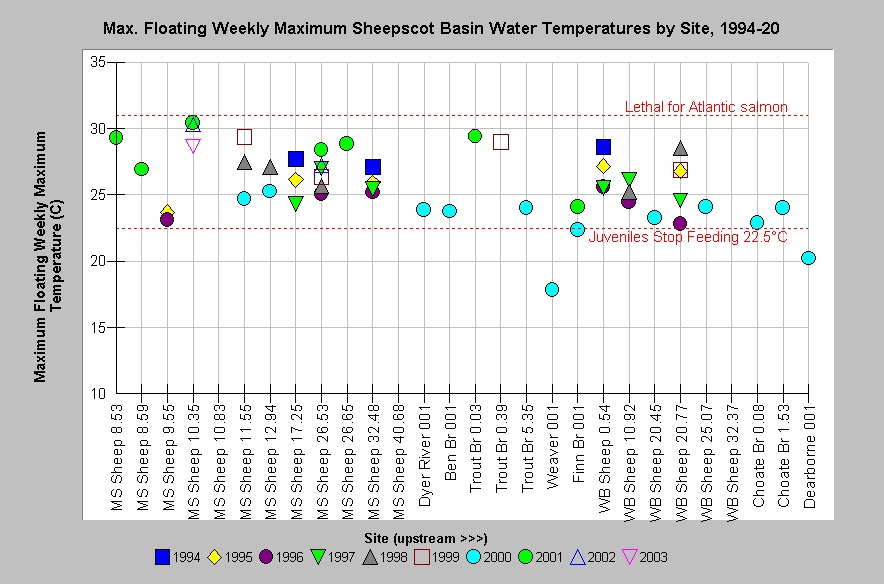
The maximum annual floating weekly maximum (MWMT) water temperature for all Sheepscot River basin locations gauged from 1994 and 2003 is displayed at left. The MWMT gives an idea of chronic high temperatures experienced at any location and the reference of 31° C recognized as lethal for Atlantic salmon is displayed. The floating weekly maximum values indicate that daily maxima approached or exceeded lethal levels at several lower mainstem Sheepscot sites, two on the lower West Branch and in lower Trout Brook every day for at least one week of the year in most years. Unless there are locally available refugia, these reaches are virtually uninhabitable for Atlantic salmon juveniles and adults for summer months. Data are from the ASC temperature database.
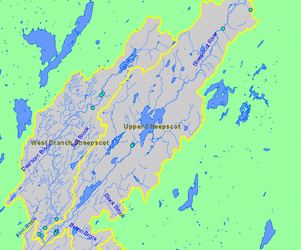
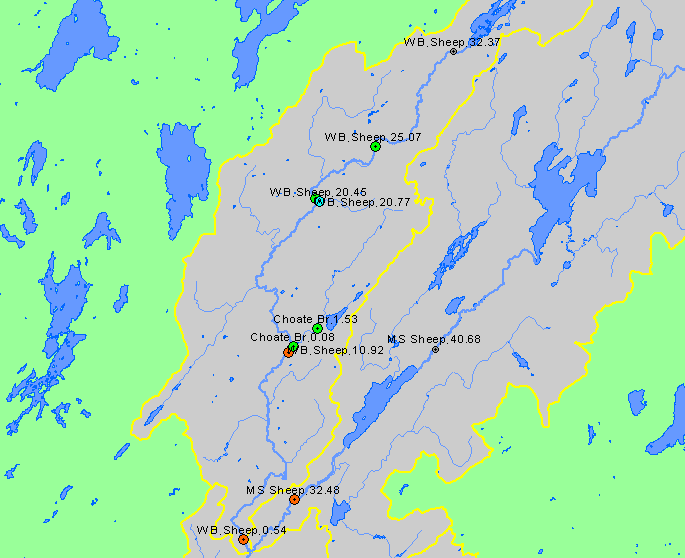 This map of the middle of the Sheepscot River watershed shows the location of temperature monitoring stations in the West Branch, displayed along with 1:100,000 scale streams and the maximum floating weekly average temperature (MWAT) at every site measured from 1994-2003. Color-coded average MWAT values show that temperatures in the lower West Branch (orange) exceed those at which juvenile Atlantic salmon can feed, while temperatures in the middle and upper reaches are cooler though still above optimal (light green), as is Choate Brook. Data are from the ASC temperature database.
Orange = Highly Unsuitable. Green = Marginally Suitable, Light Blue = Mostly Suitable, Dark Blue = Highly Suitable.
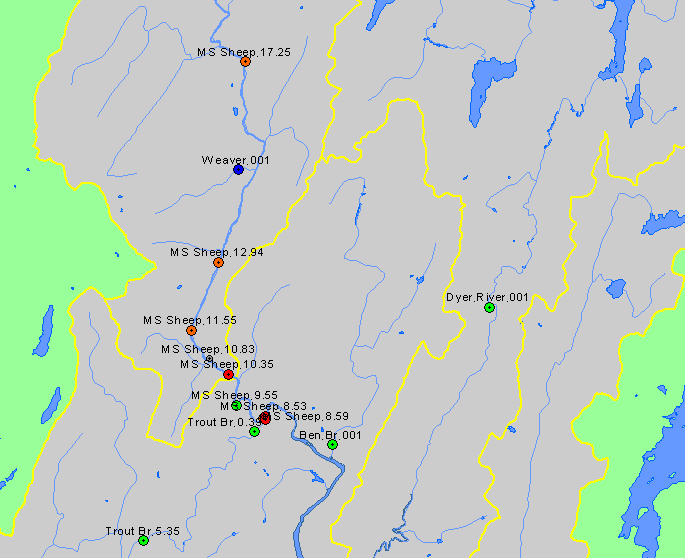
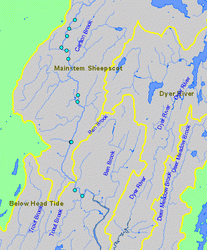
A map shows the location of temperature monitoring stations in the lower Sheepscot watershed (at left), displayed along with 1:100,000 scale streams and locations with labels showing the range of maximum floating weekly average temperature (MWAT) during all years measured from 1994-2003. Color codes are indicative of suitability for juvenile Atlantic salmon with those falling in fully optimal (blue), such as the small tributary Weaver Brook, to moderately suitable like Ben and Trout Brooks and Dyer River (light green), to fully unsuitable where high water temperature would likely be stressful or lethal to Atlantic salmon (orange). The latter describes lower mainstem Sheepscot River sites, particularly from late June through August. Data are from the ASC temperature database.
Orange = Highly Unsuitable. Green = Marginally Suitable, Light Blue = Mostly Suitable, Dark Blue = Highly Suitable.
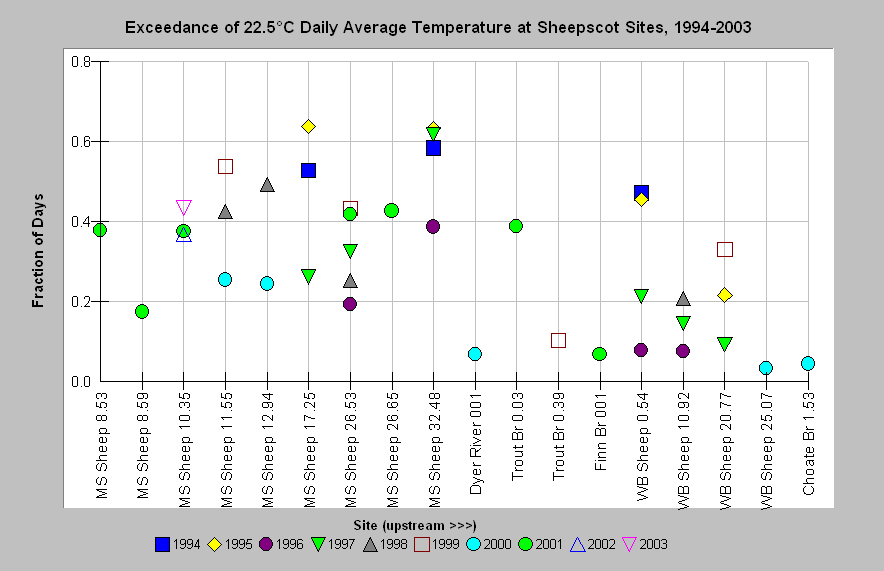
This chart shows the percent of days in June through September where average temperature exceeded 22.5°C for each site in the Sheepscot River watershed with available data in the years 1994-2003. The percent exceedance varied considerably by year at most sites, likely due to differences in flow and climate, but several locations showed significantly impaired conditions for supporting juvenile Atlantic salmon rearing on more than half of days measured. Percent exceedances were highest at mainstem Sheepscot sites, ranging between 18% and 64%. Although percent exceedances were lower in West Branch Sheepscot sites than the Mainstem Sheepscot, they were still substantial at some sites in some years. Percent exceedances were lowest in the small tributaries. Data are from the ASC temperature database.
Detailed Examples of Temperature Data at Specific Sheepscot River Sites
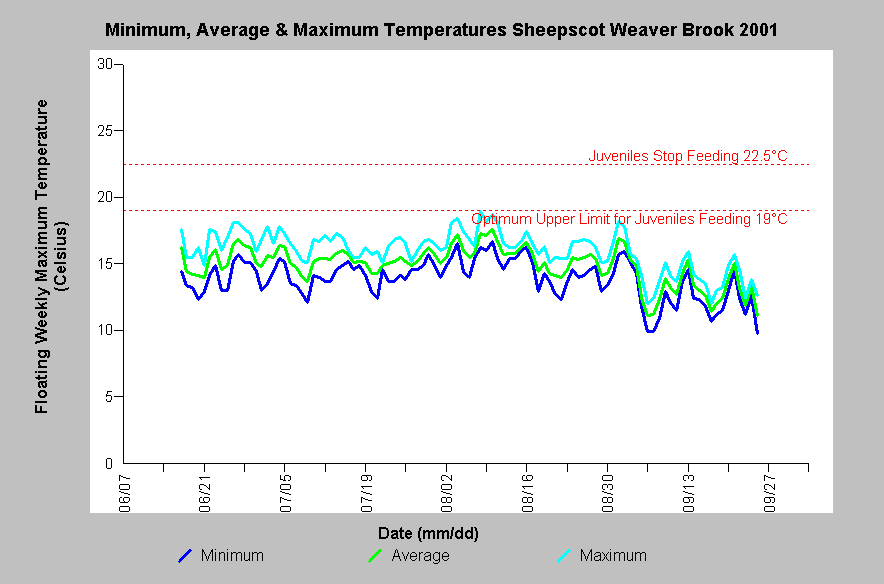
Weaver Brook represents optimal temperature ranges for Atlantic salmon when daily minimum, average and maximum daily water temperatures are reviewed (at right). Results indicate that even maximum temperatures fall within the optimal feeding range for Atlantic salmon juveniles. The water temperature fluctuation showed a maximum daily range of just 2.3° C, and 9° C throughout the whole season from June 10 to mid-September. Data are from the ASC temperature database.
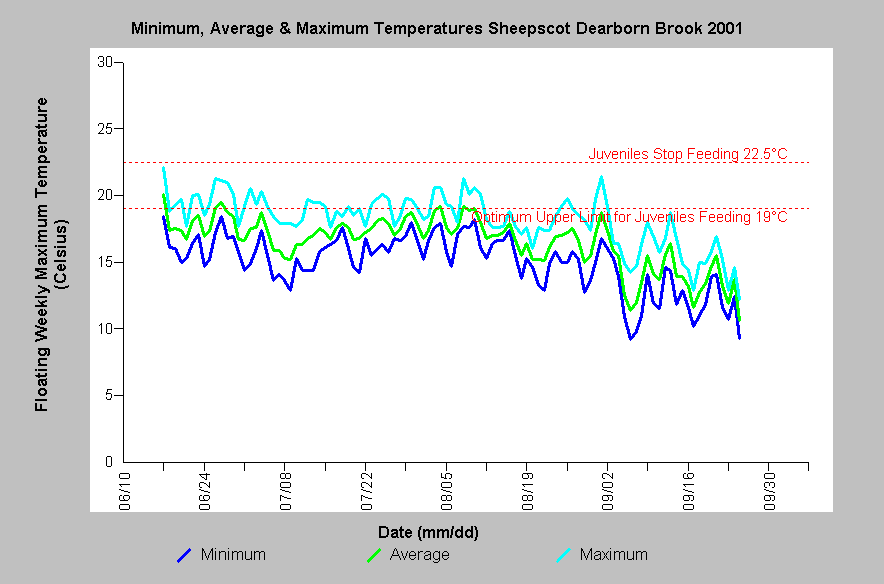 Dearborn Brook daily minimum, average and maximum water temperatures were slightly higher than those of Weaver Brook, but still mostly within optimal range for Atlantic salmon. Maximum temperatures exceeded the optimal juvenile feeding range (19° C) on some days between June and September, but never exceeded 22.5° C, which is the point where fry and parr stop feeding. Average temperatures were rarely above optimal and minimum temperatures always fell back within optimal ranges. This temperature pattern would allow juvenile Atlantic salmon to fully recover from any brief exposure to stressful water temperatures. Seasonal fluctuation was 12.3° C between June and September with a maximum 4.9° C nocturnal/diurnal variation. Data are from the ASC temperature database.
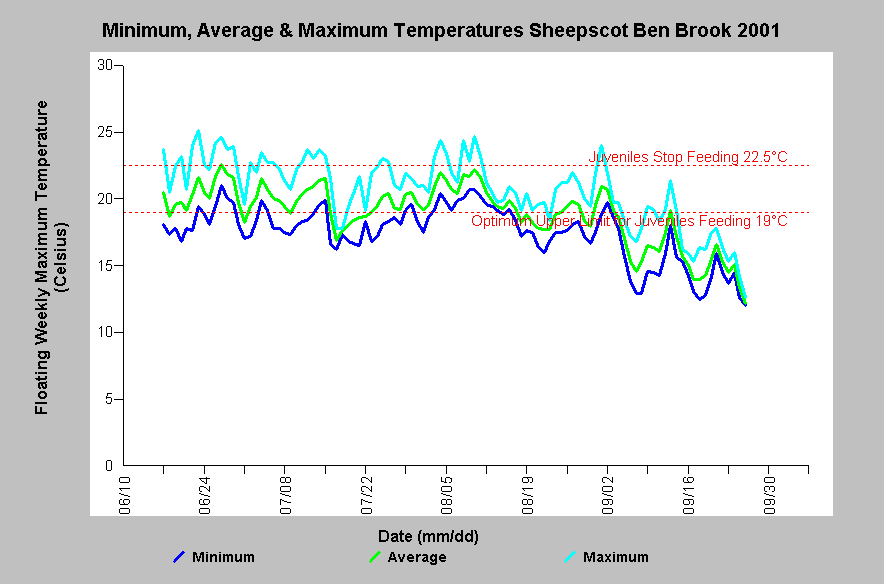 Ben Brook falls into an intermediate category with regard to Atlantic salmon juvenile rearing suitability, as indicated by the daily minimum, average and maximum water temperatures for June to mid-September 2001 (at left). Maximum temperatures exceeded highly stressful levels (22.5° C), above which fry and parr are known to stop feeding, and the daily average sometimes exceeded this reference. Minimum temperatures failed to drop back into optimal feeding ranges for juveniles for several days at a time, which inhibits recovery from stress by salmonids (McCullough, 1999). Data are from the ASC temperature database.
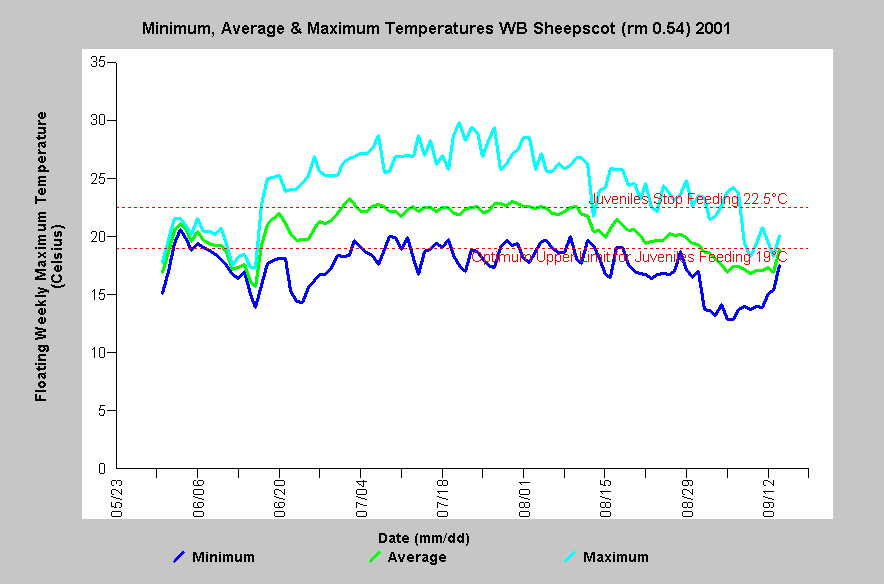
The West Branch Sheepscot River (near its mouth) is likely not suitable for Atlantic salmon rearing during the summer months due to high water temperatures as shown by the minimum, average and maximum daily values from June to mid-September 2001. Maximum water temperatures attained 29.8° C, just below the 31° C recognized as lethal. Daily averages indicated conditions of high stress for juveniles (> 22.5° C) for long periods, and minimum temperatures failed to drop back into optimal ranges for feeding (< 19° C) on many days. Seasonal fluctuation was 16.9° C between June and September with a maximum 11.1° C nocturnal/diurnal difference. Such high day-night swings of temperature are known to be highly stressful to salmonids (McCullough, 1999). Data are from the ASC temperature database.
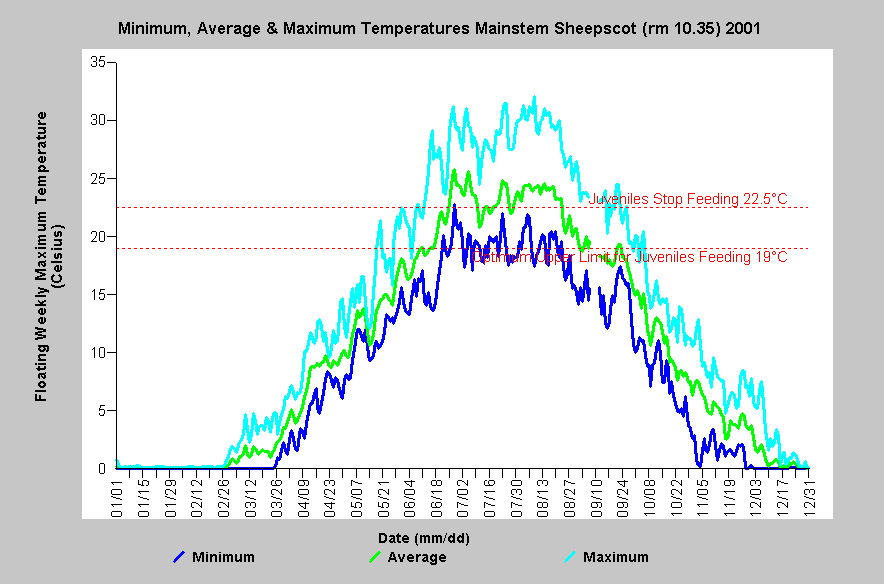 The lower mainstem Sheepscot River at mile 10.35 (above Head Tide) were likely unusable for Atlantic salmon juveniles and adults in July and August 2001 as indicated by the daily minimum, average and maximum water temperatures (at left). The absolute maximum reached 32.1° C, which is above lethal to juvenile and adult Atlantic salmon. Temperatures often exceeded 30° C between June 27 and August 22 and daily averages usually exceeded 22.5° C, which is the point at which juvenile Atlantic salmon stop feeding. Minimum temperatures during winter indicate near freezing, and severe cold can also inhibit salmonid growth. Data are from the ASC temperature database.
When temperatures reached 31.1° C at the nearby adult trapping site in 1994, three dead adult salmon were observed upstream of the trap (Arter, 2004).
The lower mainstem Sheepscot River at mile 10.35 (above Head Tide) were likely unusable for Atlantic salmon juveniles and adults in July and August 2001 as indicated by the daily minimum, average and maximum water temperatures (at left). The absolute maximum reached 32.1° C, which is above lethal to juvenile and adult Atlantic salmon. Temperatures often exceeded 30° C between June 27 and August 22 and daily averages usually exceeded 22.5° C, which is the point at which juvenile Atlantic salmon stop feeding. Minimum temperatures during winter indicate near freezing, and severe cold can also inhibit salmonid growth. Data are from the ASC temperature database.
When temperatures reached 31.1° C at the nearby adult trapping site in 1994, three dead adult salmon were observed upstream of the trap (Arter, 2004).
The minimum water temperatures in the early year showed 0° C for months at a number of locations, but adjacent areas of the stream may not have completely frozen. Water temperatures less than 4° C are known to inhibit Atlantic salmon growth. Further exploration is needed as to whether cold water temperatures could also be limiting to Atlantic salmon in the Sheepscot River basin. At the present time, there are insufficient data to support a hypothesis regarding cold water temperatures limiting Atlantic salmon production, but winter conditions could also be a factor limiting Atlantic salmon survival in the Sheepscot River.
Arter (2004) noted that ponds and reservoirs may have a warming effect on river sections just below their outlets during winter months. Data indicate that the river reaches below Sheepscot Pond, Branch Pond, James Pond, and Long Pond did not freeze, possibly because of warmwater input from the ponds. It is unknown whether these warmer-than-freezing temperatures are a benefit or detriment to salmon.Sheepscot River Potential Summer Cold Water Refugia
Juvenile Atlantic salmon establish territories and are not thought to move much during the year except during fall, when young-of-the-year and pre-smolts shift their territories (Ken Beland, pers. comm.). This lack of mobility contrasts with behavior common in other salmonid species such as brook trout, in which fish will travel long distances and congregate at thermal refugia. As such, for refugia areas to be of value to juvenile Atlantic salmon, they should be common and well-distributed across large areas. Adult Atlantic salmon also require deep cool holding pools prior to spawning.Adult Atlantic salmon also require deep cool pools for summer holding.
Examples of refugia include tributary mouths, springs, interstitial spaces in gravel, and contact with hyporheic zones or upwelling. There has not been a comprehensive effort to map thermal refugia in the Sheepscot River, although when habitat surveyors have encountered cool water, they have noted it and the USFWS has created a GIS of these locations. The resulting maps should be considered only a partial inventory of refugia, which would be expected to provide some carrying capacity for Atlantic salmon juveniles even as reaches are generally unsuitable.
Relationship to Other Hypotheses (Potential Casual Mechanisms)
Hypothesis #3: Long term changes in stream profiles due to human land use may have caused the channel to be wider and shallower than historically and; therefore, more subject to the effects of both hot and cold atmospheric condition. If sediment is clogging interstitial spaces in stream gravels and compromising pool depths, over-winter survival and summer rearing survival could be compromised (see Sediment Background page). Riparian conditions in pre-disturbance Maine forests likely had a multi-tiered canopy of hardwoods and conifers; simplification of riparian to one tree row has reduced buffer capacity for adjacent stream reaches from both heat and cold (see Riparian Background page).
Hypothesis #4: Reservoirs above dams in the Sheepscot River have thermal mass and likely alter the temperature regime of the river, warming it during some seasons and cooling it during other seasons. Additional data collection and computer modeling could help to determine how reservoirs affect water temperatures in the Sheepscot River. Dams also serve as ideal locations for introduced warm water fish species, which may directly predate on Atlantic salmon in these impoundments, and these fish also likely wash downstream and inhabit dead water reaches in low gradient areas near the mouth. See Dams Background page and Arter (2004).
Alternate Hypothesis: The Sheepscot River water temperature is within its normal range of variability to which the Atlantic salmon population has adapted.
There may be several ways in which Atlantic salmon could cope with high summer water temperatures in the Sheepscot River. One is that the river cools down at night, which may allow juveniles to feed and grow. Another is that juveniles avoid may high water temperatures by seeking out thermal refugia. Both of these discussed in more detail in the text above.
Even if Sheepscot River water temperatures are warmer than optimal for Atlantic salmon and a decrease in water temperatures would benefit Atlantic salmon, juveniles are clearly still able to survive in at least some portion of the river. Other factors such as exotic species, dams, sediment, physical habitat structure, low flows, and other water quality parameters may have more of an effect on Atlantic salmon than water temperature does. These other factors are explored in the other KRIS Sheepscot hypotheses pages.
Monitoring Trends to Test the Hypotheses
Long term temperature monitoring may allow evaluation of the effectiveness of sediment remediation, riparian improvement, or other efforts carried out to abate non-point source pollution and/or recovery Atlantic salmon. The monitoring of water temperatures using automated probes is an important tool, and will continue in the Sheepscot River watershed. Long-term monitoring is critical to determining if water temperatures are stable, increasing, or decreasing. While the hypothesis offered has been supported by current field data in the Sheepscot watershed, relationships of Atlantic salmon abundance and distribution could be further explored if conditions change. For example, if sediment control is implemented and riparian zones allowed to mature, increased canopy and improved micro-climates over streams may promote stream cooling. Conversely, global warming and human land use may contribute to stream warming. If changes become evident in water temperatures over time, these changes can be tracked and correlate with salmon data such as electrofishing and smolt-trapping. Measuring fish response is complicated due to variations in climate and hatchery stocking from year-to-year, but should be attempted nonetheless. Detailed analyses of the existing data compiled in the KRIS Sheepscot database could help to elucidate the relationships between Atlantic salmon and temperature. These datasets include temperature, climate, flow, refugia locations, stocking, electrofishing, and smolt-trapping.
Nearly all electrofishing surveys are conducted in the August and September, following high summer water temperatures. If some electrofishing surveys were also conducted in May or June, prior to the onset of high summer temperatures, then a comparison could be made to see if juvenile salmon populations undergo a substantial decrease over the summer. If a decrease is detected, it would provide evidence that high summer water temperatures are adversely affecting salmon.
As powerful a tool as automated probes are, their spatial resolution is limited to a single point in the river and are not the best tool for mapping thermal refugia. Additional techniques are required to more fully map the extent, quality, and connectivity of both existing and potential refugia. Arter (2004) suggests using aerial infrared technology to create a spatially detailed map of water temperature across the entire river and would help to identify coldwater refugia. For an example of an infrared study see Watershed Sciences (2002). Another means of mapping refugia would be to have field crews use hand-held thermometers methodically explore the river, and recording temperatures at locations such as tributary mouths, pool bottoms, and areas of groundwater seepage. Geologic maps could be used to target areas likely to contain refugia. Once refugia have been identified, effort should focus on how and when Atlantic salmon and other fish species use them. Techniques could include electrofishing, PIT (passive integrated transponder) tags, and radio tags.
References
Arter, B. S. 2004. Sheepscot River Water Quality Monitoring Strategic Plan: A guide for coordinated water quality monitoring efforts in an Atlantic salmon watershed in Maine. Prepared for the Project SHARE: Research and Management Committee. 84 pp. [975kb]
Beland, Ken. Personal communication. Senior Fisheries Biologist, Maine Atlantic Salmon Commission, Bangor, Maine.
Bryant, F. G., 1956. Stream surveys of the Sheepscot and Ducktrap river systems in Maine. U.S. Department of the Interior, Fish and Wildlife Service. Special Scientific Report: Fisheries No. 195. Washington, D.C. 22 pp. [725kb]**
Bryant, F. G. and J.V. Mahoney. 1950. West Branch of the Sheepscot River stream survey. Memo file cards containing information. U.S. Fish and Wildlife Service, Atlantic Salmon Investigations for the Maine Atlantic Sea Run Salmon Commission. Bangor, ME. 53 pp. 3.5Mb**
Bult et al. 1999.
Danie, D.S., J. G. Trial, and J. G. Stanley. 1984. Species profiles: life histories and environmental requirements of coastal fish and invertebrates (North Atlantic) -- Atlantic salmon. U.S. Fish Wildlife Service.. FWVOBS-82/11.22. U.S. Army Corps of Engineers, TR EL-82-4. 19 pp. [500kb]
Elliott, J.M. and J.A. Elliott. 1995. The effect of the rate of temperature increase on the critical thermal maximum for parr of Atlantic salmon and brown trout. J. Fish Biol. 47:917-919.
Foye, R.E. 1967. Maine Rivers: the historical Sheepscot. Maine Department of Inland Fisheries and Game. 9(2): 8-11.
Kennebec Soil and Water Conservation District (KSWCD). 2003. Water quality restoration of the West Branch Sheepscot: Final report. Written for KSWCD by M. Halsted. Funded by Maine Department of Environmental Protection §319H Project #99R-30. 31 pp. [2.8Mb]
McCullough, D. 1999 . A Review and Synthesis of Effects of Alterations to the Water Temperature Regime on Freshwater Life Stages of Salmonids, with Special Reference to Chinook Salmon. Columbia Intertribal Fisheries Commission, Portland, OR. Prepared for the U.S. Environmental Protection Agency Region 10. Published as EPA 910-R-99-010. [900 kb]
Meister, A. L. 1982. Sheepscot: An Atlantic salmon river management report. Atlantic Sea Run Salmon Commission. Bangor, ME. 47 pp. [3.7Mb]**
Metcalfe, N.B. and J.E. Thorpe. 1992. Early predictors of life-history events: the link between first feeding date, dominance and seaward migration in Atlantic salmon, Salmo salar L. J. Fish Biol. 41(Suppl. B):93-99.
National Research Council. 2003. Atlantic Salmon in Maine. Committee on Atlantic Salmon of Maine, National Research Council, National Academy of Sciences, National Academy Press, Washington D.C. [3.5Mb]
Pugh, L. 2002. Analysis summary of water quality monitoring data, 1994-2001. Sheepscot Valley Conservation Association. Alna, ME. 6 pp. [225 kb]
Watershed Sciences. 2002. Aerial surveys in the Mattole River Basin: Thermal infrared and color videography. Final report. Corvallis, OR. 24 pp. [2.8Mb]